Download resources
Book a visit
Enabling Inclusive Economies and Societies.
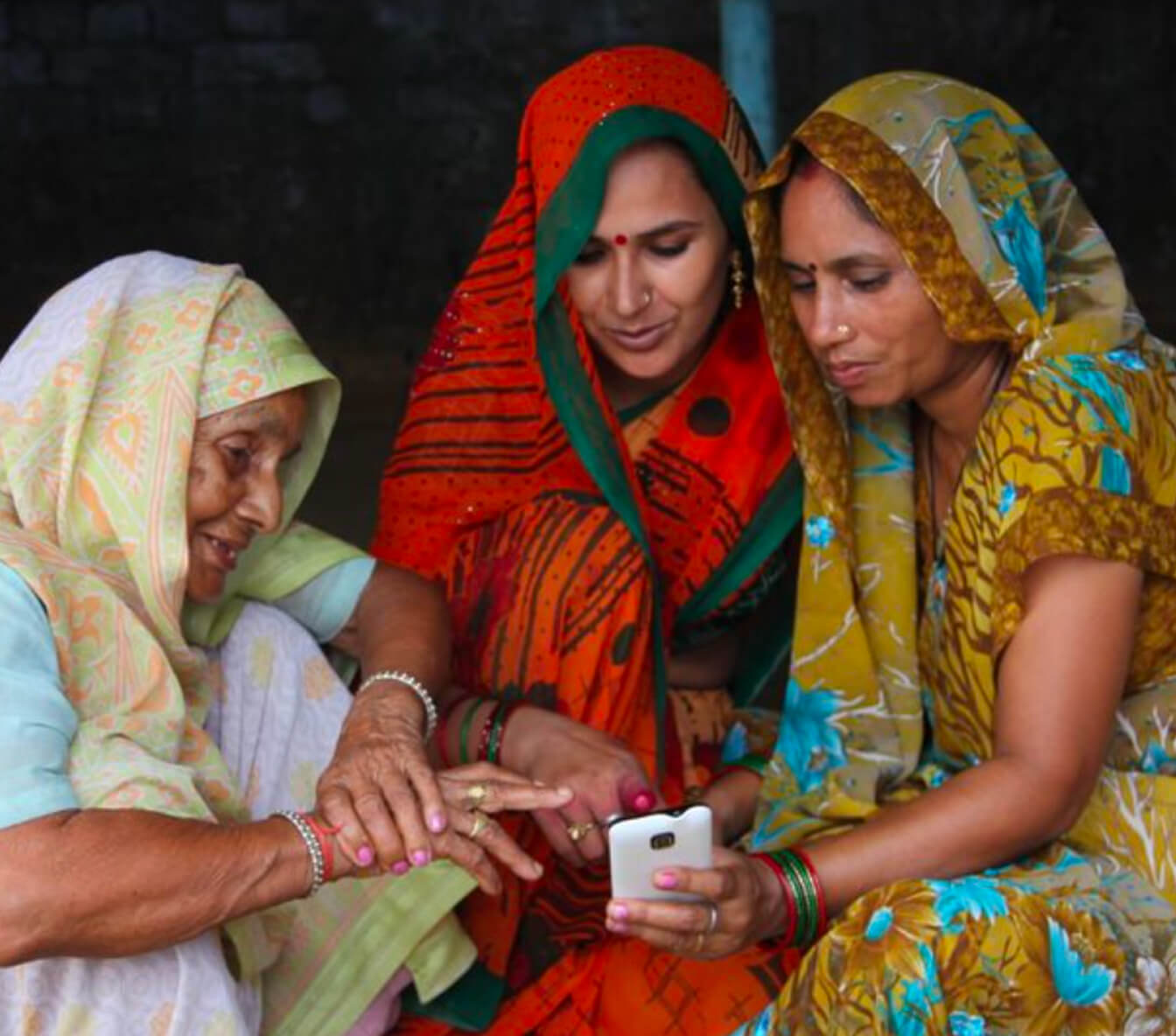
Inclusion Economics India Centre (IEIC) at the Institute for Financial Management and Research (IFMR) is a policy-engaged research initiative that strives to inform and encourage evidence-backed dialogue on economic and social inclusion. IEIC’s work in India includes research engagements across multiple states and focuses on some of India’s most challenging development issues. The work spans supporting effective governance and building state capacity to address air pollution to understanding levers and opportunities of women’s economic engagement and access to mobile technology.
Inclusion Economics India Centre works closely with Inclusion Economics at Yale University, and it began operations as an independent research centre at IFMR in November 2020, as a continuation of the body of research and policy work previously known as EPoD India.
IEIC’s data-driven research and policy engagement draws from insights across disciplines and perspectives to focus on four activities.
The centre works on research engagements across multiple states in India. IEIC’s research concerns some of India’s most challenging problems across three major themes:
Gender is a significant social determinant that profoundly influences inclusion and economic participation and opportunity. Social norms as well as gender gaps in access to and use of technology constrain women from accessing economic opportunities at the same level as men. Through research, IEIC investigates how social policy can bridge gender gaps and promote women’s engagement with paid work and if policy can help shift social norms.
Climate change is one of the biggest challenges of our times and disproportionately affects marginalised communities, in adaptation and mitigation. Through research, IEIC asks how technological tools can help alert vulnerable populations to extreme weather events and how they can improve accountability for climate change mitigation in the public sector.
Can technology-enabled early warning systems coupled with community warnings reduce the impact of extreme weather events?
Despite being designed to be inclusive, political and economic structures frequently fall short in providing citizens with equitable access to services and adequate political representation. IEIC’s research focuses on identifying solutions that can empower citizens to hold their leaders accountable. The centre also seeks to ensure equitable and reliable access to public goods, while addressing the specific needs and well-being of marginalised populations.
Can real-time data improve access to and delivery of one of the largest social protection programmes?
How can women-led social audits enhance accountability and transparency of public service delivery?
Women in Leadership in Economics (WiL) is a new multi-year initiative led by Inclusion Economics India Centre (IEIC) in partnership with Inclusion Economics at Yale University. This initiative is an ambitious, collaborative effort to generate systems change to advance Indian women’s leadership in economics and public policy.
A key component of the WiL initiative is to support the career progression and success of female economists and economics students by improving access to relevant information and strengthening institutional access to mentorship and professional networks. The initiative has partnered with a set of Indian institutions, encompassing universities and professional organisations, aiming to reshape institutional norms and structures to promote women’s advancement in the economics profession, and create leadership opportunities that will better enable women to contribute to evidence-based economic policy in India.
Women in Leadership in Economics (WiL) is a new multi-year initiative led by Inclusion Economics India Centre (IEIC) in partnership with Inclusion Economics at Yale University. This initiative is an ambitious, collaborative effort to generate systems change to advance Indian women’s leadership in economics and public policy.
A key component of the WiL initiative is to support the career progression and success of female economists and economics students by improving access to relevant information and strengthening institutional access to mentorship and professional networks. The initiative has partnered with a set of Indian institutions, encompassing universities and professional organisations, aiming to reshape institutional norms and structures to promote women’s advancement in the economics profession, and create leadership opportunities that will better enable women to contribute to evidence-based economic policy in India.
Increasing women’s leadership in economics is not only a matter of equity, it also improves the quality of research and policymaking. Evidence shows that women economists often bring new perspectives and research priorities, particularly on issues such as labour markets, social policy, and inequality. Increasing their participation strengthens the diversity and relevance of economic research and policy debates.
By addressing structural barriers and strengthening institutional support systems, the WiL initiative seeks to create a more inclusive economics profession that better reflects the diversity of society and contributes to more effective policymaking.
The WiL initiative envisions a future where women economists in India have equal opportunities to succeed, lead research agendas, and shape economic policy. In the long term, this means:
Among the several foundational steps, IEIC has partnered with the Society for Economics Research in India (SERI), a community of Indian economists, that is dedicated to fostering growth and engagement within the economics research community. They promote research collaboration, intellectual exchange and critique among economists in India.
IEIC will also work in partnership with Yale Inclusion Economics, a policy-engaged research initiative focusing on promoting inclusive and sustainable economic development through the identification and promotion of evidence-based institutional and policy reforms.
IEIC will continue to build a coalition across academia and policy, WiL aims to catalyse lasting institutional change that enables more women to lead in economics and shape the policies that affect millions of people.
Assistant Professor, Computer Science
As a field-research focused, policy-engaged initiative, IEIC offers interesting opportunities across research and policy functions. The staff get first-hand exposure to India’s greatest development challenges as well as unparalleled opportunities to work with some of the top development economists in the world. IEIC encourages persons from diverse backgrounds, particularly women and other marginalised communities, who have been underrepresented in Economics to apply to these roles.
First Floor, Jet Air House,13 Community Centre, Yusuf Sarai, New Delhi – 110049
B-230, Ground Floor, S. K. Puri, Sahdeo Mahto Marg, Boring Road, Patna- 800001, Bihar
First Floor, Senior MIG 12, E-3, Arera Colony, Bhopal, Madhya Pradesh 462016
Mail ID: